Brick Wallpaper has moved beyond cafés and loft apartments. Global buyers now use it in bedrooms, retail spaces, offices, and hospitality interiors.
Market data supports this interest. Grand View Research’s Wallpaper Market Size, Share & Trends Analysis Report describes wallpaper as a growing interior-finish category, supported by renovation activity and changing design preferences. Its findings also point to stronger demand for decorative products that combine visual impact with practical installation. However, market estimates differ between research firms. Treat every forecast as a directional guide, not a guarantee.
That distinction matters when buying across borders. A sample may look warm online but appear cold under your room’s lighting. A roll may fit one wall, yet create mismatched joints on another. Fire ratings, washability, adhesive compatibility, roll dimensions, and packaging protection require careful checking. ASTM International standards can help buyers understand testing language, while manufacturer technical sheets should confirm product-specific performance.
Small details matter.
These ten buying tips focus on decisions that experienced importers and designers often make before placing an order. They address pattern scale, color accuracy, material composition, moisture exposure, quantity calculations, shipping risks, and supplier verification. Sustainability also deserves attention. Look for transparent information about PVC content, inks, recyclability, and responsible packaging. Certifications can be useful, but certification names alone do not prove overall environmental performance.
The process is not flawless. Online images can mislead, and international terminology may create confusion. A careful buyer leaves room for uncertainty, requests physical samples, and compares evidence before payment. With that practical mindset, Brick Wallpaper can become a durable design choice rather than an expensive visual experiment.
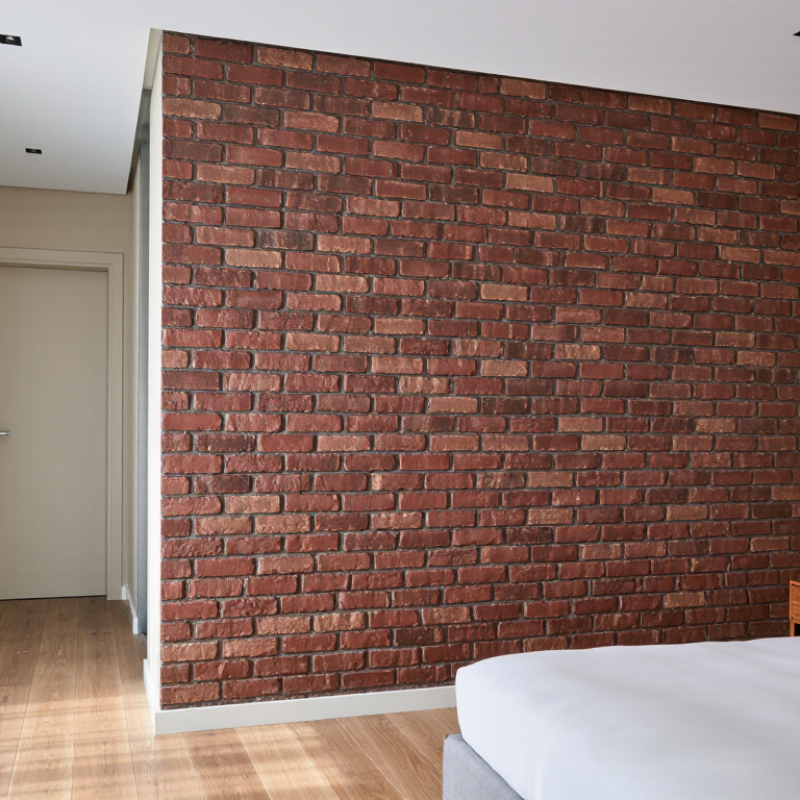
10 Brick Wallpaper Buying Tips for Global Buyers
Brick wallpaper is not one product category. It includes paper-backed sheets, non-woven rolls, vinyl-coated surfaces, and peel-and-stick films. Non-woven wallpaper feels stable during installation. Vinyl-coated options resist light splashes better. Peel-and-stick designs suit renters, but their adhesive can struggle on dusty walls. Always check the backing, roll width, washability, and removal instructions before comparing prices.
Visual accuracy depends on more than the printed brick pattern. Matte ink creates an older, chalky appearance. Raised embossing adds believable mortar lines under side lighting. Large bricks can make a small room feel busier. Pale whitewash reflects more light, while charcoal brick absorbs it. I have seen warm red patterns look orange under showroom LEDs. Request a physical sample. Digital images mislead.
Market figures show strong but uneven demand. Grand View Research estimated the global wallpaper market at about USD 1.9 billion in 2023, with growth continuing through 2030. Fortune Business Insights reported a different 2023 value because its category coverage differs. Treat forecasts as directional, not guaranteed. For international purchasing, review ISO 16000-related indoor-air testing, local fire requirements, and packaging moisture protection. A low-VOC declaration is useful, but it does not replace independent test evidence. Humidity remains easy to underestimate. A beautiful sample may still curl in a tropical shipment.
Typical coverage comparison for common wallpaper formats. Coverage is calculated from nominal roll width × roll length and can vary by pattern repeat, trimming, and installation waste.
Buying note: Check material type, washable finish, pattern repeat, fire classification, moisture resistance, adhesive requirements, and local roll-size standards before ordering.
Global buyers should treat brick wallpaper as a measured surface, not a decorative roll. 1) Measure every wall separately. 2) Record doors, windows, and ceiling height. 3) Add the pattern repeat before calculating rolls. 4) Check roll width and usable coverage, not only the advertised area. Grand View Research estimated the global wallpaper market at about USD 1.8 billion in 2023, showing how varied international products can be.
Scale changes the room. 5) Compare a full-size sample with the actual wall. Small bricks may look busy in a narrow hallway. Large bricks can overwhelm a compact room. 6) View the sample in daylight, warm lighting, and shadow. Digital colors can mislead. 7) Confirm the production batch before ordering. Slight shade differences are difficult to hide.
Surface quality needs hands-on checking. 8) Run your fingers across the embossing. Raised edges should feel even, without crushed corners or loose particles. 9) Ask for cleaning, abrasion, and light-fastness test results. ISO 105-B02 rates light fastness from 1 to 8, and higher ratings generally indicate stronger resistance to fading. 10) Check the backing for wrinkles, pinholes, and moisture damage. I once trusted a small sample and missed a repeating defect. That was careless. Request installation instructions and adhesive compatibility data before shipment. A perfect pattern cannot repair poor surface preparation.
| No. | Buying Dimension | What to Check | Practical Benchmark or Reference | Recommended Buyer Action |
|---|---|---|---|---|
| 1 | Roll Dimensions | Confirm the roll width, total length, usable coverage, and whether the stated size includes trimming or overlap allowances. | Common wallpaper widths include approximately 0.53 m and 0.70 m, while roll lengths commonly range from about 10 m to 15 m. Actual coverage is lower when pattern matching creates waste. | Calculate the required number of rolls using the usable coverage, not only the nominal roll area. |
| 2 | Wall Measurement | Measure wall height and width at several points because walls may not be perfectly level or square. | Use the greatest measured height and width. Add extra material for doors, windows, corners, installation errors, and future repairs. | Prepare a room-by-room cutting plan and keep one unopened roll for possible maintenance. |
| 3 | Pattern Repeat | Identify whether the design is free match, straight match, or drop match, and verify the repeat distance. | Free-match patterns generate the least waste. Straight-match and drop-match patterns require alignment and may increase offcut percentages, especially with large repeats. | Request a pattern diagram or installation sheet before placing a large order. |
| 4 | Brick Scale and Perspective | Compare the printed brick size with the intended room size and viewing distance. | Standard modular bricks are often close to a 2:1 length-to-height proportion, but printed wallpaper may intentionally exaggerate scale. Oversized bricks can make small rooms feel visually crowded. | Ask for a full-scale image or physical sample rather than judging the design from a small screen preview. |
| 5 | Color Accuracy | Check the base color, mortar shade, warm or cool undertones, and possible variation between production batches. | Screen colors can vary because of monitor settings, lighting, and image compression. Batch or lot consistency is important when covering one continuous wall. | Order a physical sample and purchase sufficient material from the same production batch. |
| 6 | Surface Texture | Determine whether the finish is smooth, embossed, textured, matte, satin, or reflective, and inspect how the surface handles light. | Embossed surfaces can hide minor wall imperfections, while glossy finishes may highlight unevenness, seams, and glare. | View the sample under daylight and artificial light before approving the final surface. |
| 7 | Material and Backing | Verify whether the wallpaper is paper-based, non-woven, vinyl-coated, or another construction, including the backing thickness and stability. | Non-woven products are generally dimensionally stable and commonly support paste-the-wall installation. Coated surfaces may offer improved wipeability, depending on the specification. | Request the technical specification, installation method, and care instructions in writing. |
| 8 | Seam and Edge Quality | Inspect the printed edges, roll winding, cut consistency, and the visibility of seams after adjacent panels are matched. | Clean edges and consistent winding reduce installation problems. Strong contrast between bricks and mortar makes seam misalignment more noticeable. | Test two or three sample strips side by side before approving a production order. |
| 9 | Durability and Light Resistance | Check abrasion resistance, cleanability, moisture suitability, and resistance to color fading from light exposure. | Dry rooms, kitchens, corridors, and commercial interiors have different performance needs. Wallpaper intended for bathrooms or high-moisture areas requires explicit suitability confirmation. | Match the product rating and care method to the installation environment instead of relying only on appearance. |
| 10 | Quality Control and Documentation | Confirm product codes, batch numbers, packing details, inspection criteria, tolerance limits, and replacement procedures. | A documented inspection should cover roll dimensions, print alignment, color consistency, surface defects, moisture damage, and packaging condition. | Approve a pre-shipment sample or inspection report and record batch information for every delivered carton. |
Note: Coverage, installation waste, performance, and cleaning suitability vary by product construction and local building conditions. Always verify the manufacturer’s technical specification and installation instructions before purchase.
Buying brick wallpaper internationally requires more than comparing catalog photos. Ask each supplier for current product specifications, production photos, and a physical sample. Check the wallpaper’s material, roll size, adhesive compatibility, fire performance, and emissions data. Certificates should match the exact product, not merely the factory. Verify issuing organizations and document dates before placing an order.
Price comparisons should include the complete landed cost. Add packaging, inland transport, freight, insurance, duties, and possible inspection fees. A low quotation can become expensive after these details appear. Request pricing for several quantities, such as 100, 500, and 1,000 rolls. Also ask whether printing, color matching, or custom packaging creates extra charges.
Minimum order quantities can shape the entire purchase plan. Smaller MOQs may cost more per roll but reduce unsold inventory. Larger orders often improve pricing, yet they increase storage pressure and color-batch risk. Ask how the supplier handles damaged rolls, shade variation, and late deliveries. A written sample approval process is valuable. I would not rely on promises alone. One practical weakness is that buyers sometimes compare unit prices while ignoring carton strength and replacement speed. That mistake can damage a project’s schedule. Review payment terms, inspection rights, and communication records before committing.
Samples reveal more than catalog images. Order a full repeat, not a small swatch. Check it under daylight, warm bulbs, and cloudy light. Brick edges should remain sharp without looking mechanically repeated. Touch the surface. Realistic texture often depends on embossing depth, gloss control, and substrate quality. Measure the pattern repeat before calculating waste. A sample can still mislead. Roll length and installation conditions may change the result.
Customization deserves written detail. Confirm brick size, mortar color, surface finish, roll width, and repeat direction. Ask for a digital proof and a physical color proof. Keep both for production comparison. Some suppliers adjust colors across batches, even with identical files. That problem is easy to underestimate. Grand View Research’s Wallpaper Market Size, Share and Trends Analysis, 2024–2030 reports a projected global market growth rate of about 4.6% annually. More demand can also mean tighter production schedules, so approve artwork and tolerances early.
Production standards protect the purchase. Request technical sheets covering basis weight, dimensional stability, washability, light resistance, and fire-performance classification. ASTM F793 classifies wallcoverings by durability characteristics, while EN 233 addresses finished wallpaper properties. Ask which tests apply to your destination market. Verify the laboratory report, test date, and product reference. ISO 9001 certification supports process control, but it does not guarantee every roll is perfect. Inspect a pre-shipment roll, record batch numbers, and define acceptable color variation in the contract. ભૂ
International buyers should confirm roll width, length, weight, and packaging before ordering. Shipping costs can change sharply with oversized cartons. Ask for moisture-resistant wrapping and corner protection. Request clear commercial documents, product specifications, and installation instructions. Check whether the material needs special handling during transit. Delays happen. Leave enough time for customs processing and final delivery.
Order extra material for trimming, pattern matching, and future repairs. Ten to fifteen percent is often practical, but complex layouts may require more. Keep one unopened roll in a dry, dark place. Color can vary between production batches. Before installation, let the wallpaper adjust indoors for at least forty-eight hours. The wall should be clean, dry, smooth, and properly primed. Test one small section first. It may reveal poor adhesion, visible seams, or unexpected color changes.
Use a qualified installer familiar with the wallpaper’s backing and paste requirements. Temperature and humidity affect drying speed. Avoid placing seams beside strong windows or heating vents. For care, use a soft, slightly damp cloth, then dry the surface gently. Do not scrub textured areas. Record the batch number, purchase date, and remaining roll quantity. Replacement planning is often overlooked. If damage occurs later, a saved roll may prevent a frustrating color mismatch. Even careful measurements can be wrong, especially around doors and corners. Recheck them on site.