Leave Your Message

China Top 10 Plastic Tile Manufacturers in 2026

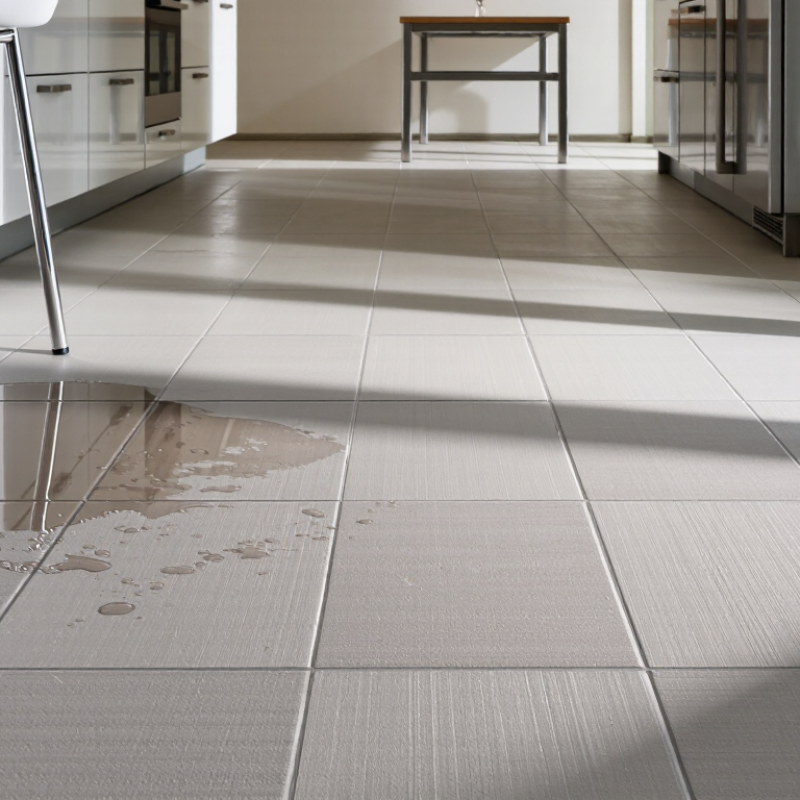
Plastic Tile has moved beyond a low-cost covering. In 2026, buyers compare wear resistance, dimensional stability, surface texture, installation needs, and the credibility of the manufacturer. A tile’s performance is easy to picture: chair legs scrape a kitchen floor, water gathers near an entryway, and sunlight falls across a patterned surface. These everyday conditions matter more than a polished product photograph.

Market reports offer useful context, but their categories require care. Fortune Business Insights estimated the global vinyl flooring market at USD 25.61 billion in 2023 and projected growth through 2032. Vinyl flooring includes products beyond plastic tiles, so this figure indicates broader demand rather than the size of the Plastic Tile segment alone. The report is a starting point, not a ranking of manufacturers. Product specifications, factory capabilities, quality controls, and documented customer experience remain essential checks.

A credible comparison should separate verified facts from marketing claims. “A product’s real value is revealed in the conditions it must withstand.” This practical observation guides the list of China’s top manufacturers in 2026, while reminding readers that no single tile suits every room. Some details deserve closer scrutiny. Check the technical sheet. Compare like with like.
China Top 10 Plastic Tile Manufacturers in 2026

Understanding Plastic Tiles and Their Main Applications

Plastic tiles are modular surfaces made from polymers such as PVC or polypropylene. They may have solid, textured, or perforated faces, with edges designed to click or lock together. Their performance depends on material, thickness, backing, and installation—not appearance alone. A tile that feels firm in a sample may behave differently across a large floor.

Common applications include garages, workshops, utility rooms, sports areas, and temporary event spaces. Interlocking tiles can cover a concrete floor without wet adhesives, making individual sections easier to replace. Textured surfaces can provide grip where shoes bring in water or dust. Perforated tiles allow drainage in some settings, though dirt can collect beneath them. Small detail, but it matters.

Plastic tiles are also used on balconies, in storage areas, and as wall coverings in selected interiors. Check the product’s intended use, load rating, cleaning guidance, and resistance to heat or chemicals before installation. Uneven floors may cause movement or gaps, while sunlight can affect some materials over time. They are not a universal fix. I have seen neat-looking installations become troublesome when the subfloor was ignored; choosing the tile is only part of the job.
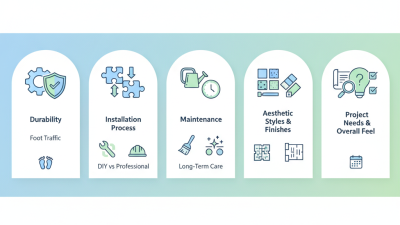
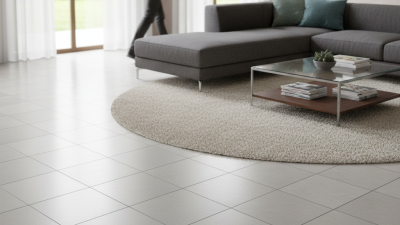
China’s Plastic Tile Industry and Market Landscape in 2026

China’s plastic tile industry in 2026 serves residential renovation, commercial interiors, and utility spaces. Products may use PVC, vinyl, or composite constructions, with differences in core density, surface layer, and installation method. Buyers should compare technical sheets, not rely on “waterproof” as a complete performance claim. Ask for wear-layer details, dimensional tolerances, and test conditions. Small differences matter.

Manufacturing activity is concentrated around established building-material supply chains, where access to films, resins, packaging, and logistics can support production at scale. Export orders often require consistent color matching across batches and clear carton labeling. Request a recent sample and check its edges, surface texture, and locking fit under ordinary lighting. A showroom sample may not represent a full production run.

Market conditions are not uniform. Demand shifts with renovation budgets, construction cycles, freight costs, and local preferences for wood- or stone-look finishes. Public figures may group plastic tiles with broader flooring categories, so market-size estimates can be difficult to compare. That uncertainty deserves attention. For sourcing, verify factory capacity, quality-control records, lead times, and the process for handling defects before placing a large order. Ask how the supplier protects tiles from warping or surface damage during storage and shipment.

China Top 10 Plastic Tile Manufacturers in 2026 - China’s Plastic Tile Industry and Market Landscape in 2026

Industry landscape overview. The entries below describe product segments and manufacturing characteristics, not ranked or named companies. “Plastic tile” covers several distinct products; PVC flooring is shown separately from outdoor plastic decking and related products.

No. Manufacturer / Product Segment Typical Products Common Applications Manufacturing and Market Characteristics 2026 Market Consideration
1 Resilient PVC flooring producers Sheet flooring, homogeneous and heterogeneous flooring, and PVC tiles Healthcare, education, offices, retail, and residential interiors Production commonly involves formulation, calendaring or extrusion, surface finishing, and quality inspection. Demand is influenced by renovation activity, commercial construction, product durability, and installation cost.
2 Luxury vinyl tile (LVT) producers Dry-back, loose-lay, and click-system vinyl tiles and planks Homes, hotels, offices, and retail spaces Products typically combine a decorative layer with wear and backing layers; construction varies by product design. Design variety, wear-layer specifications, and ease of installation are important purchasing factors.
3 Stone-plastic composite (SPC) flooring producers Rigid-core vinyl tiles and planks, often with click-lock edges Residential renovations and selected commercial interiors SPC products use a rigid mineral-filled polymer core; product performance depends on the complete construction, not the core alone. Competition centers on dimensional stability, locking-system quality, surface finish, and consistent production.
4 Wood-plastic composite (WPC) flooring producers Rigid-core flooring with a foamed or composite core Residential interiors and light commercial spaces WPC flooring is distinct from outdoor WPC decking; construction and acoustic properties differ among products. Buyers compare comfort, thickness, installation system, and suitability for the intended site conditions.
5 Interlocking PVC tile producers Modular, puzzle-edge, and garage-style PVC tiles Garages, workshops, gyms, and utility areas Modular formats can simplify replacement of individual tiles; load capacity and chemical resistance are product-specific. Commercial buyers typically assess traffic, cleaning requirements, slip characteristics, and installation method.
6 Recycled-content plastic flooring producers PVC flooring and composite products incorporating recycled material Projects with material-efficiency or sustainability requirements Recycled content, traceability, and product performance require verification for each product and production batch. Environmental claims should be supported by transparent documentation and applicable product testing.
7 Outdoor WPC decking and tile producers Deck boards, interlocking deck tiles, and related outdoor profiles Balconies, terraces, garden paths, and outdoor leisure areas These products are not the same as indoor PVC or LVT flooring; weathering and drainage design are relevant considerations. UV exposure, moisture, temperature changes, slip performance, and installation conditions affect product selection.
8 Decorative PVC wall and ceiling panel producers Interior panels, cladding, and modular decorative components Residential and commercial interior fit-outs Often grouped with plastic building finishes, but these panels are not floor tiles and should be evaluated separately. Fire performance, indoor-use suitability, surface durability, and installation details are key specification checks.
9 OEM and private-label flooring manufacturers Customer-specified LVT, SPC, PVC tile, and flooring accessories Export, wholesale, and private-label supply programs Capabilities vary by factory; buyers commonly review production controls, sample approval, packaging, and inspection procedures. Supplier comparisons should be based on verified capacity, product documentation, and order-specific quality requirements.
10 Specialty and project flooring producers Custom colors, formats, surface textures, and project-specific flooring systems Transport, institutional, retail, and other specified projects Products may require project-specific testing and coordination among the manufacturer, installer, and specifier. Technical documentation, installation guidance, and consistency across production lots can be decisive.

Criteria for Selecting the Top Plastic Tile Manufacturers

Criteria for Selecting the Top Plastic Tile Manufacturers

A reliable supplier should provide test reports for the exact tile series being offered. Check dimensional stability, flexural strength, abrasion resistance, and water absorption under relevant ASTM or ISO methods. Do not rely on a generic “high durability” claim. Ask for batch-level results, production tolerances, and clear installation instructions. A tile sample can look sturdy on a desk yet flex under a loaded chair. That difference matters.

Environmental evidence deserves equal scrutiny. The 2024 Global Status Report for Buildings and Construction, published by UNEP and GlobalABC, estimates that buildings accounted for 34% of global energy demand and 37% of energy- and process-related carbon emissions in 2022. This does not prove that one tile is greener than another. Request product-specific environmental declarations, recycled-content documentation, and information on expected service life. Also compare cleaning needs and replacement rates. Small details add up. Certifications can help, but they are not a substitute for checking scope and test dates. I would still question vague claims, even when a polished brochure makes them sound convincing. Ask how the product performs in a real room, not just under ideal laboratory conditions.

Profiles of China’s Top 10 Plastic Tile Manufacturers in 2026

China Top 10 Plastic Tile Manufacturers in 2026

Profiles of China’s Top 10 Plastic Tile Manufacturers in 2026

China’s leading plastic tile manufacturers in 2026 show different strengths. Some focus on lightweight PVC roofing sheets. Others produce synthetic resin tiles, translucent panels, or recycled polymer systems. Their factories commonly serve residential, agricultural, commercial, and temporary construction projects.

The strongest profiles combine extrusion capacity, stable color control, and documented weather testing. Several manufacturers operate near Guangdong, Jiangsu, Zhejiang, and Shandong, where plastic processing supply chains are mature. According to Grand View Research’s 2024 construction plastics analysis, demand is supported by lightweight materials, corrosion resistance, and faster installation. The International Energy Agency also reports continued pressure to reduce building energy use, making reflective roofing surfaces more relevant in hot regions.

Quality differences remain visible. Better producers publish test results for impact strength, thermal expansion, ultraviolet exposure, and flame performance. Some use automated thickness monitoring beside the extrusion line. Others still depend heavily on manual inspection. That weakness matters. A 2024 report from the China Building Materials Industry Association highlights durability, recycling, and production consistency as key industry concerns. Buyers should inspect batch records, warranty terms, and independent laboratory reports rather than trust catalog photos.

The top ten profiles are not equally strong. Some excel at custom colors, while others offer faster delivery or thicker profiles. A few claim recycled content without clear percentages. That deserves scrutiny. Factory visits, sample testing, and roof-load calculations remain practical ways to separate reliable manufacturing from polished marketing.

Comparing Manufacturers by Products, Quality, and Market Reach

Comparing the top plastic tile manufacturers in 2026 means looking beyond catalog photos. Check product ranges, from wall panels and floor tiles to trims and installation accessories. Ask for technical sheets listing dimensions, thickness, surface finish, and intended use. Small differences matter. A tile that looks sturdy may flex when unsupported.

Quality is easier to judge with physical samples. Compare edge finish, color consistency, surface texture, and how tightly tiles fit together. Request details about quality checks and batch controls, then compare them with your own measurements. A polished sample can mislead. It may not represent a full production run, so sample approval alone is not enough. That’s worth remembering.

Market reach involves more than shipping to many destinations. Review available packaging options, typical lead times, export experience, and the clarity of product documents. Ask whether the manufacturer can maintain consistent specifications across repeat orders. For large projects, confirm how damaged cartons or color variation are handled. These comparisons can expose gaps, but no simple ranking captures every buyer’s needs. A supplier suited to a small renovation may not fit a multi-site project.