Top 10 Types of PVC Tiles for Global Buyers?
Choosing the right Pvc Tiles begins with understanding where performance matters most: homes, offices, retail spaces, or industrial rooms.
The global vinyl flooring market reached approximately USD 39.27 billion in 2023, according to Grand View Research. Its report projects continued growth through 2030, supported by renovation activity, easy maintenance, and improved design technology. These trends explain why international buyers are examining more than color and price.
They are comparing structure, installation, durability, and environmental documentation.
Pvc Tiles can include homogeneous tiles, heterogeneous tiles, luxury vinyl tiles, interlocking tiles, anti-static tiles, conductive tiles, slip-resistant tiles, carpet-look tiles, wood-look tiles, and stone-look designs. Each type answers a different purchasing need. A hospital may prioritize hygiene and chemical resistance. A warehouse may require load stability and fast replacement. A retail project may focus on realistic textures and visual consistency.
ASTM International standards and ISO testing frameworks provide useful references for abrasion, dimensional stability, slip performance, and indoor emissions. The Resilient Floor Covering Institute also emphasizes responsible manufacturing and product transparency. Buyers should request technical datasheets, test reports, warranty terms, and batch samples before approving a container order.
Appearance can mislead.
A thick tile is not automatically stronger. A low-priced product may create higher lifecycle costs through adhesive failure, fading, or difficult repairs. Recycled content is valuable, but it should be verified through credible declarations rather than vague marketing language. This guide reviews the top ten types of Pvc Tiles, while recognizing one practical limitation: no universal ranking suits every climate, substrate, budget, or installation skill level.
PVC Tile Fundamentals: Formats, Polymer Structure, and Global Terminology
Top 10 Types of PVC Tiles for Global Buyers?
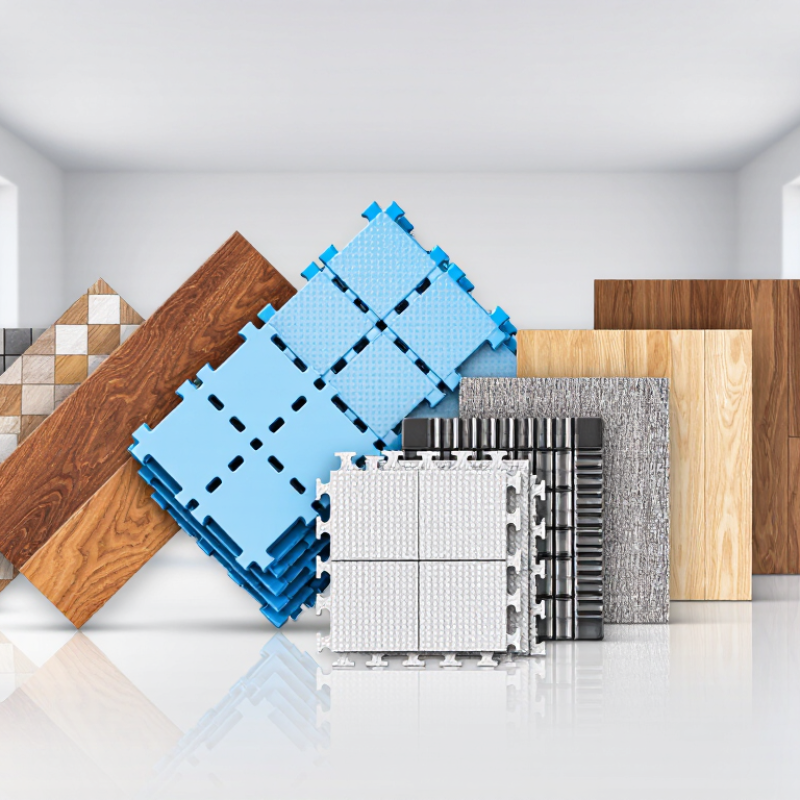
PVC tiles are thermoplastic products built from polyvinyl chloride, a polymer containing carbon, hydrogen, and chlorine. Chlorine represents about 57% of PVC’s mass, influencing fire behavior and material density. Flexible tiles usually contain plasticisers, while rigid formats use stabilisers and mineral fillers. Common global terms include LVT, SPC, homogeneous tile, heterogeneous tile, peel-and-stick, loose-lay, and interlocking tile.
Formats also signal construction differences. LVT often has a printed decorative layer and protective wear layer. SPC uses a stone-filled rigid core, giving stronger dimensional stability. Homogeneous tiles use one consistent layer throughout, while heterogeneous tiles combine several layers. Grand View Research estimated the PVC flooring market at approximately USD 4.7 billion in 2023. However, reports classify vinyl products differently, so comparisons are not perfectly reliable. That needs careful review.
Tips: Ask suppliers for thickness, wear-layer depth, dimensional-change data, and test standards. Confirm whether “PVC tile” means pure PVC, composite SPC, or multilayer vinyl. ASTM and ISO references can improve comparison, but certificates should match the exact product. Small wording differences matter. A glossy surface may look durable, yet abrasion performance depends on the wear layer, not appearance. For international purchasing, check dimensions in millimetres, fire-test categories, slip resistance, and installation temperature. These details prevent expensive misunderstandings.
Top 10 PVC Tile Types by Representative Nominal Coverage per Piece
PVC flooring products are commonly classified by construction, installation method, and polymer structure. Flexible vinyl products use plasticized PVC, while SPC and WPC products use a rigid PVC-based core. The dimensions below are representative trade formats used in global specifications; exact sizes vary by market and supplier.
The chart compares nominal coverage area per piece. LVT means Luxury Vinyl Tile, VCT means Vinyl Composition Tile, SPC means Stone Plastic Composite, and WPC means Wood Plastic Composite. Buyers should confirm wear-layer thickness, total thickness, locking profile, fire classification, and installation standards in the technical data sheet before purchasing.
Performance Benchmarks: ASTM F1066, ISO 10582, and 0.3–0.7 mm Wear Layers
Top 10 Types of PVC Tiles for Global Buyers
PVC tile selection should begin with performance, not appearance. Common options include homogeneous tiles, heterogeneous tiles, dryback LVT, click tiles, loose-lay tiles, anti-slip tiles, conductive tiles, static-dissipative tiles, acoustic tiles, and textured industrial tiles. Each type suits a different setting, from quiet offices to warehouses with rolling carts.
ASTM F1066 is useful for evaluating vinyl composition tile quality, consistency, and basic physical performance. ISO 10582 focuses on resilient heterogeneous PVC floor coverings, including wear behavior and dimensional performance. Neither standard makes every project decision for you. A 0.3 mm wear layer may suit light offices, while 0.5–0.7 mm is safer for retail aisles, corridors, and frequent chair movement. However, thicker is not always better if installation or subfloor preparation is poor. I have seen durable tiles fail because moisture remained under the adhesive.
Tips: Ask for current test reports, technical data, and batch samples. Check wear-layer thickness with documented methods, not visual inspection. Test a sample under chair casters or trolley wheels when possible. Also review slip resistance, residual indentation, dimensional stability, and chemical resistance. A rating may look impressive, but real traffic patterns can expose weaknesses quickly. Allow room for uncertainty, especially when local climate and maintenance practices differ.
Application Guide: Matching PVC Tile Types to Residential, Commercial, and Industrial Use
Residential buyers usually need warmth, easy cleaning, and quiet underfoot.
Luxury vinyl tile, WPC tile, self-adhesive tile, and loose-lay tile suit bedrooms, kitchens, and rental homes. WPC adds a softer feel, while loose-lay products allow faster replacement. Dry-back LVT offers stronger design control, but installation quality matters more than many buyers expect. A dusty subfloor can ruin an attractive tile.
Commercial spaces need durability and manageable maintenance.
Homogeneous PVC tile supports heavy corridors, schools, and retail areas because its wear layer runs through the product. Heterogeneous tile provides layered design and comfort. SPC tile offers strong dimensional stability near entrances and busy offices. Acoustic PVC tile can reduce footfall noise in hospitality and healthcare areas.
Grand View Research estimates the global resilient flooring market reached about USD 40.8 billion in 2023, with projected growth of roughly 5.9% annually through 2030.
Demand is clearly expanding, but product selection remains site-specific.
Industrial facilities require more than visual appeal.
Conductive or ESD PVC tile helps control static in electronics rooms, laboratories, and controlled production areas. Heavy-duty homogeneous tile suits workshops, while chemical-resistant formulations support selected processing zones. ASTM and ISO test results should confirm slip resistance, dimensional stability, fire performance, and electrical properties. Ratings alone can mislead. I would request a physical sample, test it against forklifts, moisture, cleaning chemicals, and real subfloor conditions before purchasing.
The cheapest tile is often expensive later.