Choosing a reliable Uv Sheet manufacturer can influence product durability, installation costs, and long-term customer satisfaction. Global buyers often compare suppliers from different regions, yet factory claims rarely tell the entire story. Material quality matters.
This guide introduces ten Uv Sheet manufacturers serving international markets. It considers production experience, technical capability, certifications, export performance, and after-sales support. We also examine thickness options, surface treatment, light transmission, weather resistance, and customization services. These details become important when sheets face strong sunlight, humidity, dust, or frequent temperature changes. A useful supplier should provide clear technical data, sample approval, stable packaging, and traceable quality records. Product testing should support the claims.
The selection is designed for contractors, distributors, architects, and industrial buyers. It is not based only on company size or online visibility. Factory audits, response speed, minimum order quantities, and delivery communication can reveal practical strengths. Small details matter. A well-packed sheet may arrive without scratches, while poor protection can create expensive losses before installation. Buyers should still verify certificates, warranties, and regional compliance independently. No ranking is perfect. Supplier capabilities may change, and published information can become outdated. Treat this list as a starting point, not a final purchasing decision. Request samples, compare written quotations, and test performance under your actual application conditions. That careful process offers stronger evidence than attractive brochures or broad promises.
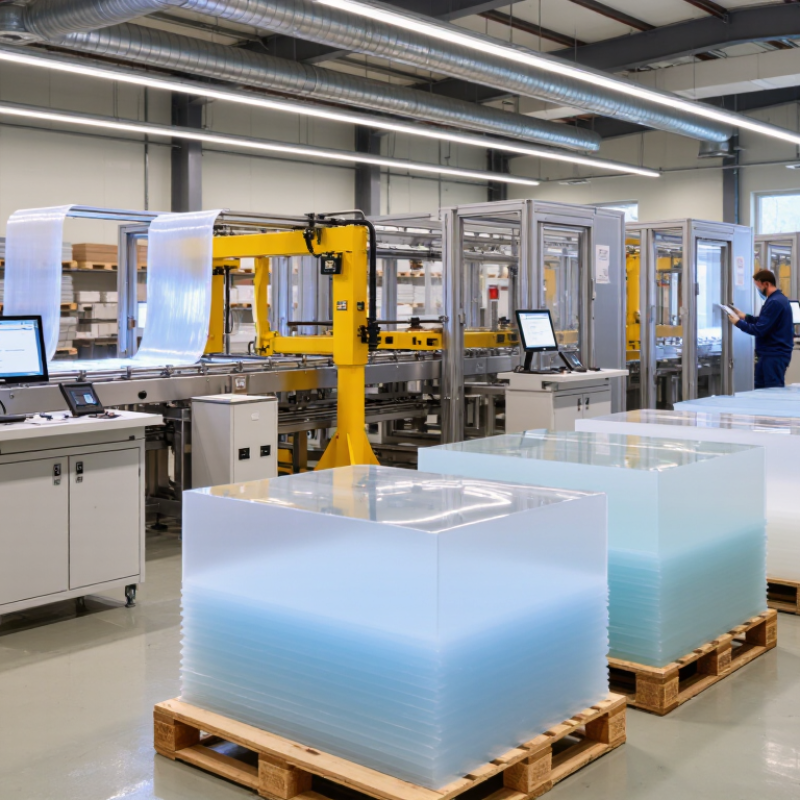
UV sheets are plastic panels designed to resist damage from ultraviolet radiation. Many use polycarbonate, acrylic, or PVC formulations with UV stabilizers. These additives slow yellowing, brittleness, and surface cracking during outdoor exposure. The term can be confusing. Some suppliers also use “UV sheet” for panels used in printing or curing processes.
In construction, UV-resistant sheets appear in skylights, greenhouse walls, balcony screens, and covered walkways. Clear panels admit daylight while reducing the need for electric lighting. Tinted or textured sheets can soften glare and improve privacy. In workshops, solid sheets protect machine areas from dust, impact, and scattered particles. Installation quality matters. Poorly sealed edges can admit moisture, even when the sheet itself performs well.
Global buyers should check the resin type, thickness, light transmission, impact rating, and tested weathering period. A greenhouse panel may need heat control, while a safety guard needs stronger impact resistance. Local building rules also affect fire behavior and permitted applications. Field installers often inspect the protective film, support spacing, and expansion gaps before fitting panels. Small errors can create warped surfaces later. I have seen buyers focus heavily on price and overlook replacement access. That choice may save money initially, but it can complicate maintenance in remote projects. Test data is useful, yet real climate exposure remains imperfect. Salt air, dust, hail, and repeated temperature changes can produce different results.

Comparing UV sheet manufacturers requires more than checking price or glossy samples.
Plastics Europe reported global plastics production at 413.8 million tonnes in 2023, showing the scale of the supply chain. Buyers should still examine resin traceability, production capacity, and batch consistency.
Ask for thickness tolerance, UV exposure results, and test conditions. A clear report should reference standards such as ISO 4892-3 or ASTM G154, not simply claim “weather resistant.”
Performance needs context.
The International Energy Agency reported 456 GW of global solar photovoltaic additions in 2023, increasing demand for durable outdoor materials. However, a sheet used for roofing faces stronger heat, moisture, and impact stress than an indoor sign panel.
Compare yellowing data, haze retention, tensile strength, and warranty limits under realistic climates. Short warranties deserve caution.
Very low prices may hide thinner coatings or recycled content without disclosure.
Reliable manufacturers provide factory audit records, calibration certificates, and recent third-party test reports.
They should explain whether UV protection is co-extruded, surface-applied, or mixed through the material. Production samples matter.
Inspect edges, protective film adhesion, warping, and color uniformity after delivery. Some buyers overlook packaging and container humidity, yet damaged sheets can fail before installation.
No supplier is perfect; even a strong report may represent controlled laboratory exposure, not years beside a hot coastline. Ask difficult questions, record every specification, and compare evidence rather than promises.
Top 10 UV Sheet Manufacturers for Global Buyers
Choosing among the top 10 UV sheet manufacturers requires more than comparing prices. Global buyers should examine production experience, material consistency, and technical support. A capable manufacturer can provide test reports for UV resistance, light transmission, haze, thickness, and surface hardness. These details matter in greenhouse panels, outdoor signage, protective glazing, and industrial covers. Ask for samples before approving a large order. Hold them under direct light. Check whether the surface shows waves, scratches, or uneven color. Small defects can become expensive during installation.
Reliable suppliers should explain resin grades, extrusion methods, quality-control points, and batch traceability. Confirm available thicknesses, sheet sizes, edge protection, and packaging strength. A wooden crate may protect panels better than thin cardboard during ocean transport. Buyers should also review production capacity, lead times, export experience, and documentation for the destination market. Independent laboratory testing adds credibility, especially when performance claims appear unusually strong. No supplier is perfect. Even a qualified factory may struggle with urgent custom orders or sudden material changes. I would compare several samples, not one. A polished catalog can hide practical weaknesses. Clear communication, honest limitations, and consistent records often reveal more than a low quotation.
| Rank | Anonymous Manufacturer Profile | Primary UV Sheet Material | Common Thickness Range | Typical Sheet Format | UV Protection Configuration | Relevant Test Standards | Typical Application Areas | Global-Buyer Documentation |
|---|---|---|---|---|---|---|---|---|
| 01 | Profile 01 | UV-stabilized polycarbonate solid sheet | 1.0–12.0 mm | 1220 × 2440 mm; custom cutting available | UV-protective co-extruded surface on one side | ISO 4892-3; ASTM G154; ASTM D3935 | Machine guards, glazing, partitions, industrial covers | Technical datasheet, SDS, packing list, certificate of origin |
| 02 | Profile 02 | UV-resistant acrylic sheet | 1.5–25.0 mm | 1220 × 2440 mm; 2050 × 3050 mm | UV-resistant acrylic formulation; transparent and opal grades | ISO 7823-1; ISO 4892-2; ASTM D256 | Signage, displays, lighting diffusers, interior glazing | Material specification, color chart, dimensional tolerance data |
| 03 | Profile 03 | UV-coated polycarbonate multiwall sheet | 4–25 mm | 2100 × 5800 mm; 2100 × 11800 mm | UV coating on the exterior face; cellular thermal insulation | EN 16153; ISO 4892-3; EN 13501-1 | Greenhouses, canopies, skylights, covered walkways | Installation guide, fire classification, thermal data, warranty terms |
| 04 | Profile 04 | UV-stabilized PVC rigid sheet | 0.5–10.0 mm | 1220 × 2440 mm; 1560 × 3050 mm | UV-stabilized resin or protective surface treatment | ISO 11833; ISO 4892-3; ASTM D638 | Wall cladding, fabrication, printing substrates, clean areas | SDS, RoHS declaration, REACH statement, test report |
| 05 | Profile 05 | UV-resistant PETG sheet | 0.5–12.0 mm | 1220 × 2440 mm; custom formats | UV-resistant grade for outdoor forming and fabrication | ISO 4892-3; ASTM D790; ASTM D1003 | Point-of-sale displays, thermoformed parts, protective screens | Forming guide, optical data, compliance declarations, SDS |
| 06 | Profile 06 | UV-resistant FRP translucent sheet | 0.8–3.0 mm | 760–1100 mm width; roll or cut length | UV-stabilized resin with translucent reinforcement | ISO 4892-3; EN 13501-1; ASTM D635 | Roofing panels, agricultural buildings, industrial daylighting | Light-transmission data, fire test report, installation instructions |
| 07 | Profile 07 | UV-stabilized HDPE sheet | 2–30 mm | 1220 × 2440 mm; 1500 × 3000 mm | Carbon-black or additive-based UV stabilization | ISO 4892-3; ISO 527; ASTM D4976 | Outdoor tanks, liners, agricultural equipment, fabrication | Material grade certificate, density data, SDS, cutting guidance |
| 08 | Profile 08 | UV-resistant PMMA cast sheet | 2–50 mm | 1220 × 2440 mm; 2030 × 3050 mm | Inherent outdoor weatherability with optional surface coating | ISO 7823-1; ISO 4892-2; ASTM D4802 | Architectural glazing, aquariums, noise barriers, signage | Optical properties, color tolerance, thickness tolerance, SDS |
| 09 | Profile 09 | UV-coated polycarbonate corrugated sheet | 0.7–2.0 mm | 660–1100 mm effective width; cut lengths | UV-protective layer on the weather-facing side | ISO 4892-3; EN 13501-1; ASTM D638 | Light roofing, agricultural structures, sheds, carports | Profile drawing, overlap guide, fire data, installation manual |
| 10 | Profile 10 | UV-stabilized polypropylene sheet | 1–20 mm | 1000 × 2000 mm; 1220 × 2440 mm | UV-stabilized compound for outdoor service conditions | ISO 4892-3; ISO 527; ASTM D4101 | Reusable packaging, agricultural panels, industrial fabrication | Technical datasheet, recycled-content statement, SDS, compliance file |
For a top-ten UV sheet shortlist, quality starts with measurable performance, not attractive samples. Ask for thickness tolerance, surface uniformity, haze, impact strength, and ultraviolet aging results. ASTM G154 or ISO 4892-3 testing can reveal yellowing and brittleness after accelerated exposure. A glossy sheet may still fail outdoors.
Certification adds useful discipline. The ISO Survey 2023 recorded over 1.26 million ISO 9001 certificates worldwide, showing how widely quality systems are adopted. However, certification alone proves process control, not excellent UV stability. Request current certificates, issuing-body details, scope, and batch traceability. ISO 14001 can support environmental management, while ISO 45001 indicates workplace safety practices. Check the actual documents. Some suppliers provide old copies.
Capacity needs careful examination. Plastics Europe’s Plastics—The Fast Facts 2024 reported global plastics production of 413.8 million tonnes in 2023. That figure reflects the entire plastics industry, not UV sheets specifically. Still, it highlights a crowded supply base. Ask whether quoted capacity means installed output or available monthly capacity. Confirm line numbers, maximum sheet dimensions, thickness range, resin supply, and backup production. I would also inspect recent production records and container-loading photos. A factory can promise 500 tonnes monthly, yet struggle with a sudden large order. This is where buyer judgment remains imperfect. Small trial orders, third-party testing, and retained samples reduce that risk.
Top 10 UV Sheet Manufacturers for Global Buyers?
How to Choose and Source the Right UV Sheet Supplier
Choosing a UV sheet supplier requires more than comparing prices. Define the application first: outdoor signs, greenhouse panels, machine guards, or interior partitions. Each use demands different impact strength, light transmission, thickness, and weather resistance. Ask whether the sheet is acrylic, polycarbonate, or another polymer. The wrong material can yellow, crack, or distort under heat.
Request technical data before discussing large quantities. Useful documents include UV-aging results, dimensional tolerances, fire-performance information, and batch inspection records. Ask for samples cut to your expected size. Check the surface under strong light. Look for bubbles, waviness, scratches, and uneven coating. A clean sample helps, but it does not prove stable mass production.
Supplier audits add practical confidence. Review factory equipment, quality-control steps, packaging methods, and production capacity. Confirm minimum order quantities, lead times, replacement procedures, and shipping terms in writing. For international orders, ask for export documents and compliance information relevant to the destination market. Do not rely only on polished photographs. They can hide weak packaging or inconsistent batches. A trial order is safer than a large commitment, although it may increase the initial cost. I have found that buyers sometimes focus too heavily on unit price and overlook cutting waste, freight damage, and delayed installation. Those costs can change the real quotation considerably. Keep communication records, approve a reference sample, and specify measurable acceptance standards before production begins.