Leave Your Message
Kitchen Furniture Wallpaper is becoming a practical design tool for global kitchen projects, not merely a decorative surface. It can refresh cabinet doors, pantry panels, islands, and backsplash zones without replacing every component. Grand View Research’s Wallpaper Market Size, Share & Trends Analysis Report identifies rising renovation activity and demand for design variety as important market drivers. These trends matter to buyers comparing color, texture, durability, and installation costs across different regions.
Kitchen environments are demanding. Steam, oil mist, fingerprints, and repeated cleaning quickly expose weak materials. The 2024 Houzz U.S. Kitchen Trends Study reports that homeowners continue investing in upgraded kitchen features, while NKBA’s Design Trends research highlights the importance of durable, personalized, and easy-care finishes. These findings support a closer look at vinyl, PVC, peel-and-stick, embossed, wood-grain, and fire-conscious wallpaper options. Appearance alone is not enough.
Small details matter.
A realistic oak pattern should align across cabinet panels. A matte surface can hide fingerprints better than high-gloss film. Yet global buyers should examine adhesive performance, thickness, edge sealing, moisture resistance, and supplier testing documents. Market reports often combine residential wallpaper with commercial applications, so their figures cannot describe kitchen furniture demand perfectly. That limitation deserves attention. This 2026 guide therefore compares major Kitchen Furniture Wallpaper types through practical installation experience, material knowledge, regional purchasing considerations, and evidence from established industry reports. Buyers should still verify local building requirements, product certifications, cleaning instructions, and sample performance before placing large orders. Trends change quickly. Kitchen failures cost more than attractive samples suggest.
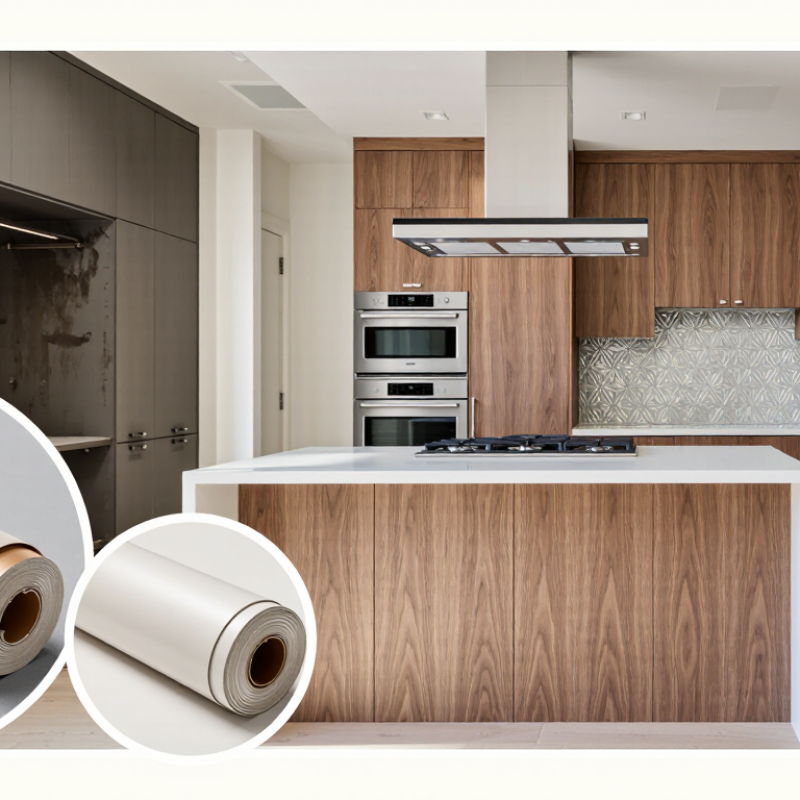
For 2026 global buyers, kitchen furniture wallpaper means a thin decorative covering for cabinet surfaces. It may cover doors, drawer fronts, side panels, and appliance surrounds. Unlike ordinary wall wallpaper, it needs better resistance to moisture, heat, stains, and daily friction. Installers usually measure every panel before cutting. A small mistake can expose an unfinished edge.
Its main use is updating tired kitchen furniture without replacing complete cabinet structures. It can also coordinate different materials across an open kitchen. Common types include PVC-coated paper, self-adhesive vinyl, PET film, and textured laminate sheets. Each type behaves differently. Vinyl handles light splashes well. PET film often offers sharper color and stronger surface stability. Textured finishes can imitate wood grain or stone. They also collect more grease in deep grooves.
Key features include dimensional stability, cleanability, adhesion, scratch resistance, and low odor. Reliable suppliers should provide material data, care instructions, and suitable temperature limits. The backing must sit flat on a dry, smooth, degreased surface. Avoid trusting appearance alone. A glossy finish may brighten a dark kitchen, but it can reveal fingerprints quickly. One practical weakness is edge durability, especially near sinks and dishwashers. Careful sealing helps, but it cannot repair poor preparation. Test a small hidden area before full application. That step feels slow, yet it can prevent expensive rework.
| Wallpaper / Surface Type | Basic Definition | Typical Kitchen Uses | Key Features | Moisture & Heat Performance | Cleaning & Maintenance | Typical Thickness | Best Buying Consideration |
|---|---|---|---|---|---|---|---|
| PVC Self-Adhesive Film | Flexible polymer film with a pressure-sensitive adhesive backing, supplied in rolls or sheets. | Cabinet doors, drawer fronts, furniture side panels, and quick renovation projects. | Wide color and wood-grain selection; easy to cut; suitable for smooth, clean substrates; many versions can be repositioned during installation. | Good splash resistance when edges and seams are sealed. Standard grades should not be exposed to direct flame or prolonged high heat. | Wipe with a soft cloth and mild, non-abrasive detergent. Avoid solvents, scouring pads, and standing water at the edges. | Approximately 0.15–0.35 mm, excluding the release liner. | Check adhesive compatibility, surface preparation requirements, shrinkage resistance, and edge-sealing instructions. |
| Decorative PVC Furniture Foil | A decorative thermoplastic foil, commonly laminated to MDF or similar boards using heat, pressure, or vacuum forming. | Factory-made cabinet doors, routed fronts, curved profiles, and three-dimensional furniture components. | Can wrap profiled surfaces; consistent factory finish; available in matte, gloss, wood, stone, and solid-color designs. | Resistant to ordinary kitchen humidity and splashes when properly bonded. Heat resistance varies by grade and bonding system. | Generally low maintenance; use a damp cloth and mild cleaner. Damaged sections may require professional replacement. | Approximately 0.25–0.60 mm. | Request forming limits, bond-strength data, surface-cleaning instructions, and resistance test results before volume purchasing. |
| PET Decorative Film | A polyethylene terephthalate film used as a decorative and protective surface layer over furniture panels. | Modern cabinet fronts, flat panels, drawer fronts, and low-gloss or anti-fingerprint furniture surfaces. | Good dimensional stability, clear print reproduction, and attractive matte or soft-touch appearances; often selected for a contemporary look. | Good resistance to moisture and everyday kitchen temperatures. It still requires protection from direct heat and hot cookware. | Usually easy to clean with water and a neutral detergent. Abrasive powders may damage the finish. | Approximately 0.20–0.50 mm. | Compare scratch resistance, stain resistance, gloss level, anti-fingerprint performance, and recycling information. |
| PP Decorative Film | A polypropylene-based decorative film laminated to furniture boards or used as a surface wrapping material. | Flat cabinet panels, drawer fronts, shelving, and projects seeking a chlorine-free plastic surface option. | Lightweight, moisture-resistant, and available with printed wood, stone, textile, or solid-color patterns. | Good resistance to household moisture. Performance near ovens, hobs, and steam outlets depends on the specific grade and installation details. | Clean with a soft cloth and diluted neutral detergent. Avoid prolonged contact with strong chemicals. | Approximately 0.20–0.50 mm. | Confirm the substrate, lamination temperature, edge-treatment method, and performance under local climate conditions. |
| Melamine Decorative Paper | Printed decorative paper impregnated with thermosetting resin and bonded to particleboard or MDF under heat and pressure. | Cabinet carcasses, doors, shelves, workroom furniture, and economical flat-pack kitchen panels. | Hard, uniform surface; efficient for large-volume production; broad range of wood and solid-color patterns. | Good everyday moisture resistance on the face. Unsealed edges and damaged areas can allow board swelling. | Easy to wipe clean. Protect exposed edges and avoid excessive water or steam. | Decorative overlay commonly about 0.10–0.30 mm; total panel thickness is much greater. | Evaluate board density, edge banding, formaldehyde emissions, surface abrasion rating, and resistance to swelling. |
| HPL Decorative Laminate | High-pressure laminate made from resin-treated decorative and kraft papers consolidated under heat and pressure. | High-use cabinet fronts, countertops, vertical panels, islands, and furniture requiring a hard-wearing surface. | High surface durability, strong design variety, and good resistance to abrasion, stains, and impact compared with thin films. | Good resistance to normal kitchen humidity and moderate heat. It is not a substitute for a heat shield near direct flame or hot appliances. | Clean with a damp cloth and mild detergent. Do not cut directly on the surface or use abrasive cleaners. | Approximately 0.60–1.20 mm for common decorative sheets. | Compare wear rating, impact resistance, postforming capability, adhesive system, and substrate flatness. |
| Acrylic Decorative Panel Surface | A high-gloss or matte acrylic-based surface layer bonded to a furniture panel, often used to create a glass-like appearance. | Contemporary cabinet doors, island panels, splashback-style furniture panels, and feature surfaces. | Strong visual depth, high color clarity, reflective finish options, and a smooth non-porous surface. | Good moisture resistance. High-gloss surfaces may be more sensitive to scratching and localized heat than compact laminates. | Use a clean microfiber cloth and mild soap solution. Avoid rough sponges and ammonia-based or abrasive products. | Approximately 1.00–2.00 mm for the decorative layer or sheet, depending on construction. | Check gloss retention, scratch-repair method, color consistency, edge finishing, and protective-film removal instructions. |
| Natural Wood Veneer | A thin layer of real wood bonded to a stable furniture substrate and protected with lacquer, oil, or another finish. | Premium cabinet doors, drawer fronts, end panels, and furniture features requiring authentic wood grain. | Natural grain variation, repairability, and a warm tactile appearance; each panel may be visually unique. | Finish-dependent moisture resistance. Prolonged water, steam, or direct heat can discolor, warp, or damage the veneer and substrate. | Dust regularly and wipe spills promptly. Follow the coating manufacturer’s care instructions; avoid soaking the surface. | Approximately 0.50–1.50 mm for common sliced veneer. | Review wood species, veneer matching, finish type, sustainability documentation, color variation, and moisture protection. |
| Decorative Self-Adhesive Paper | Printed paper with a pressure-sensitive adhesive, generally intended for light-duty decorative renewal rather than heavy-duty cabinet protection. | Temporary makeovers, low-contact furniture panels, interior cabinet surfaces, and dry areas away from sinks and cookers. | Low cost, lightweight, simple installation, and many printed patterns; usually less durable than plastic films or laminates. | Limited moisture and heat resistance unless specifically coated and rated for kitchen use; avoid wet zones and hot surfaces. | Clean gently with a nearly dry cloth. Excess water can soften the paper or weaken the adhesive. | Approximately 0.10–0.25 mm, excluding the release liner. | Confirm that the product is rated for furniture use, and test adhesion, colorfastness, and moisture performance on a sample panel. |
| Buyer note: Performance depends on the complete system, including the film or laminate, adhesive, substrate, edge treatment, installation quality, and distance from heat sources. Thickness ranges are indicative market ranges rather than universal specifications. Always request current technical data sheets and test samples before placing a production order. | |||||||